
How to Avoid a Stop-Work Order on Your Atlanta Home Renovation
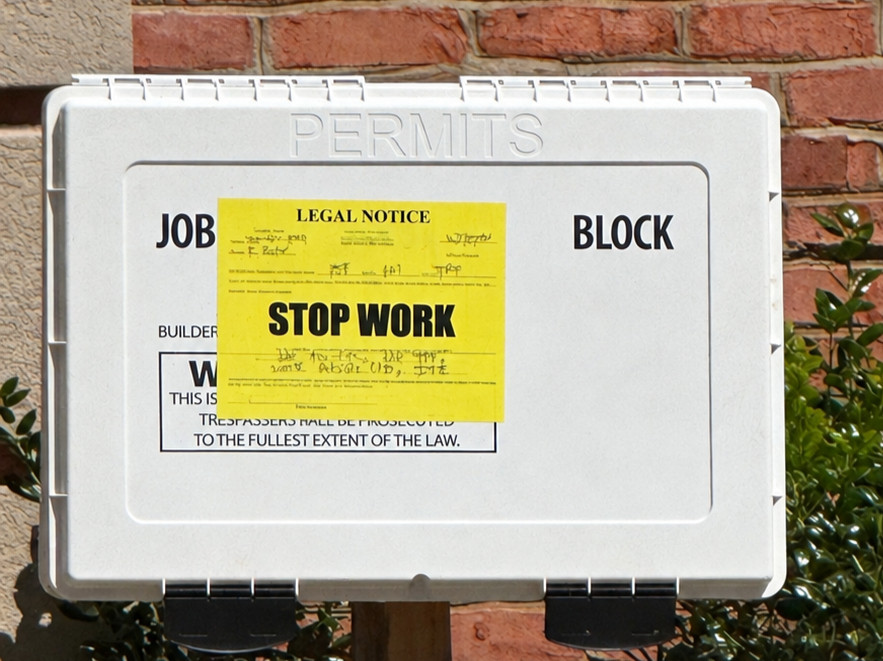
We were preparing to permit a bathroom renovation for an Atlanta homeowner when we discovered an open stop-work order on the property.
The current homeowners hadn't performed the work that caused it. The order dated back to work performed under a previous owner.
Before we could move forward with the permit for the new bathroom, that old issue had to be addressed. That meant documenting the previous work, obtaining the necessary permits, providing required information and drawings, paying applicable fees, and meeting with the inspector to review what had already been constructed.
A stop-work order can halt a renovation while permitting and compliance issues are resolved. And, as this project demonstrated, an unresolved issue can create problems for a future owner who had nothing to do with the original work.
The good news is that many stop-work orders can be avoided with proper planning before construction begins.
Here's what Atlanta homeowners should know.
Why Does Atlanta Issue Stop-Work Orders?
The City of Atlanta identifies several circumstances that can result in a stop-work order, including unpermitted construction and construction activity beyond the scope of an existing permit. If violations aren't corrected, the City also states that citations may be issued as necessary.
The first situation is fairly straightforward: work requiring a permit is started before the appropriate permit is obtained.
The second can be less obvious. A project may have been properly permitted initially, but the work performed ultimately goes beyond the approved scope. We'll come back to that below.
“Another Contractor Told Me I Don't Need a Permit”
We hear this fairly often.
Whether a renovation requires a permit shouldn't be based solely on someone's opinion. Requirements depend on the jurisdiction, scope of work and, in some circumstances, the value of the work.
For example, the City of Atlanta provides an exemption for otherwise lawful general repair work with a total valuation of less than $10,000. But that doesn't mean every project under $10,000 is exempt from permitting. The type of work being performed still matters. The City also advises that building new, altering, adding to, demolishing, or changing the use or layout of a property will likely require approval, depending on the scope and zoning district.
If there's a legitimate question about whether a permit is required, we encourage homeowners to confirm the requirement directly with the applicable permitting department before construction begins.
Determine Permit Requirements Before Construction Starts
Permitting requirements vary by jurisdiction.
Blue Juniper Construction regularly works with permitting departments throughout metro Atlanta, including the City of Atlanta, Brookhaven, Roswell, Decatur, and unincorporated DeKalb County.
Because we're familiar with these jurisdictions and their permitting processes, we can normally identify during the initial site assessment whether the proposed scope is likely to require permits.
That conversation should happen before construction begins—not after demolition.
For a permitted renovation, permitting should be incorporated into the preconstruction process so the plans, applications, trade permits, inspections and construction schedule all work together.
Don't Cover the Work Before Required Inspections
Getting the permit is only the beginning.
Most permitted projects require inspections at various stages of construction. Depending on the project, those can include framing, electrical, plumbing, mechanical, insulation, drywall and other inspections. The City of Atlanta states that most permitted projects will likely require inspections and that noncompliant work will result in a failed inspection requiring reinspection.
The City also requires Department of City Planning (DCP)-stamped plans to be available on site for inspections.
That's why inspections need to be built into the construction schedule.
If work requiring inspection is covered prematurely, it can create additional complications and potentially require finished work to be opened so the underlying construction can be evaluated.
Good project management anticipates those inspections before drywall, tile or other finishes make the work inaccessible.
What If the Scope Changes During Construction?
Changes happen during remodeling.
Once walls and floors are opened, we may discover damaged framing, outdated plumbing, electrical issues, termite damage or other conditions that weren't visible during the initial assessment. A homeowner may also decide to change part of the design after construction begins.
The important question becomes: Does this change affect the permitted scope?
If we open a wall and discover a significant structural condition, for example, the appropriate response isn't necessarily to repair it immediately and keep going. We first need to determine whether the change requires revised drawings, engineering, an amendment to the permit or some other approval.
The goal is to address the change before proceeding with work that may fall outside the approved scope.
What Happens If You Start Work Without the Required Permit?
A stop-work order can involve much more than someone posting a notice on the property.
Depending on the circumstances, construction may have to stop while the issue is resolved. The homeowner or contractor may need to:
Obtain permits after construction has already started.
Prepare drawings or other documentation.
Meet with City inspectors.
Pay applicable permit or other fees.
Make completed work available for inspection.
Correct work that doesn't meet applicable requirements.
Schedule additional inspections before construction can continue.
Atlanta states that people receiving stop-work orders will be directed to correct the violations and may be issued citations if violations aren't corrected.
The result can be exactly the opposite of what someone hoped to accomplish by avoiding the permitting process: more work, additional expense and a longer project.
What Happened With Our Atlanta Bathroom Project?
In the project mentioned at the beginning of this article, the new bathroom wasn't actually the problem.
The previous owner's unresolved work was.
Before we could move forward with the permit for our clients' bathroom renovation, the existing issue had to be resolved. That involved documenting the previous work, obtaining the necessary permits, providing the required information and drawings, paying applicable fees, and meeting with the inspector to review the work that had already been constructed.
Only after that issue was addressed could the permitting process for the new renovation move forward.
It's a good example of why avoiding the permitting process today can potentially create a problem years later—even for someone else.
Buying a Renovated Atlanta Home? Check the Permit History
Permit history isn't something to think about only when you're preparing to remodel.
If you're considering purchasing a home that has undergone significant renovations or additions, ask the seller for permit records associated with the work.
You can also research the property through the City of Atlanta. The Office of Buildings allows open-records requests for information that can include building and trade permits, building and trade inspections, zoning-enforcement inspections, zoning-enforcement violations, plans and Certificates of Occupancy.
That doesn't mean every older renovation without an easily located record necessarily has a problem. But when you're purchasing a house with substantial previous work, permit and inspection history can be an important part of your due diligence.
A beautifully renovated kitchen, finished basement, new deck or expanded primary suite doesn't tell you by itself what happened behind the walls—or whether the permitting process was completed.
What Blue Juniper Handles on a Permitted Renovation
For projects requiring permits, our role isn't simply to tell the homeowner, “You need a permit.”
We manage the permitting process as part of the overall project.
Depending on the project, that can include preparing and coordinating permit applications, submitting required documentation, communicating with the jurisdiction, coordinating applicable trade permits, scheduling required inspections, responding to inspection comments, and managing the permit through final approval.
At project closeout, we also obtain the appropriate Certificate of Completion or Certificate of Occupancy when applicable to the permitted work.
The objective is straightforward: when the project is finished, we don't just want the bathroom, kitchen or addition to look complete. We want the permitting and inspection process properly completed as well.
Before starting a renovation that may require permits, ask your contractor:
Does this project require a permit?
Who is responsible for obtaining and managing the permits?
What building and trade inspections will be required?
How are those inspections incorporated into the construction schedule?
What happens if something discovered during construction changes the approved scope?
Who is responsible for making sure the permits receive final approval and are properly closed out?
If the answer to the first question isn't clear, don't simply assume a permit isn't necessary. Verify the requirement with the applicable permitting department.
Proper Permitting Starts Before Demolition
Permits and inspections aren't separate from the construction process. They're part of it.
A well-planned renovation considers permitting before demolition, anticipates inspections in the construction schedule, evaluates changes before proceeding with them, and follows the permit through final approval.
That requires planning at the beginning of a project, but it can help prevent much larger problems later—including a stop-work order that delays the current renovation or leaves an unresolved issue for a future homeowner.
Planning a renovation in metro Atlanta? Schedule a site assessment with Blue Juniper Construction. We'll review your proposed scope, identify which permits and inspections are likely to be required, and incorporate them into the project plan before demolition starts.


Comments